
Fengshui, also known as geomancy, is an ancient Chinese practice and tradition that uses charms, arrangements, and coordination. Feng shui is to balance the yin and yang traits, which is believed to bring good fortune to home dwellers.
There are ways to balance the abundance of the five elements – wood, fire, metal, earth, and water. On the other hand, water and fire were undesirable elements to associate with your house.
Following this balance is essential as humans change the environment when they build homes, thus changing the flow of beneficial energy or qi.
National Geographic said, “Feng shui is an ancient Chinese art of arranging buildings, objects, and space in an environment to achieve harmony and balance. Feng shui means “the way of wind and water.” It has roots in early Taoism but is still popular today, having spread throughout China and even to Western cultures.”
He also added, “Feng shui is a method of balancing yin and yang, and improving the flow of chi by arranging furniture, decorations, buildings, and even whole cities in a beneficial way. The ancient Chinese people believed that arranging things to create positive chi would ensure good health, improve interpersonal relationships, and bring luck and prosperity.”
Zoë Sessums of Architecturaldigest, 7 Simple Ways to Use Feng Shui in Your Home mentioned,” The goal of feng shui is to invite positive chi into your home so that your life feels both energized and balanced, and it’s a relatively simple way to improve the vibes of your space.”
Here are Eight Foolproof Feng Shui practices that would help invite those positive vibes right into your home.
- Your front door
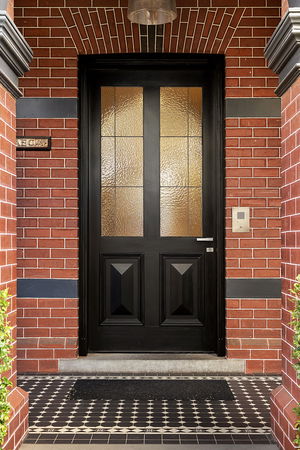
The entrance door plays an important role in your home. It is like the house’s mouth and acts as a portal of entry that could affect the energy flow that comes in.
The size of the front door should be proportionate to the house. You wouldn’t want a small door to a mansion or a large door to a tiny hut. It wouldn’t feel right, would it? Feng shui warns that disproportionate door sizes may cause problems with wealth and career, Fengshuinexus says. The front door must also be larger than other doors inside the house, they added.
Also, it is strongly advised not to put a mirror at the entrance door as it could reflect the flow of the positive qi or chi back out the door. Never align your entrance door with another door as it lets the flow of energy right out, and there should be no squeaking hinges.
Color should go along with the location of the entrance door. Legacy.In advised, “East or southeast facing door: Choose a color compatible with the wood element (Green or brown). South facing door: Use red, orange, pink, purple, magenta, or yellow to be in harmony with the fire element.
Southwest or northeast facing door: This direction corresponds to the earth element, and the associated colors are in sandy and earthy tones.
West or northwest facing door: The metal element affects your chi in this direction. Make sure you color your door white or grey.
- Clean up your mess
Yes, your house should be clutter-free! The mess and dirt in your home blocks the natural flow of energy. Also, it can result to Inability to focus and process information, fengshuinexus said. As it is backed by science, they added, “Neuroscientists at Princeton University conducted an experiment that measured people’s task performance in an organized and a disorganized environment. They found that physical unorganized objects lying around are “visual stimuli” that competes for your attention.”
Clutter affects our energy, as we are not happy when distracted or stress, thus inviting all the negative energy.
- Think Vertical
Vertical lines manifests Yang energy. Tall or upright furniture stands for growth, expansion, abundance.
Zoë Sessums of Architecturaldigest, 7 Simple Ways to Use Feng Shui in Your Home advised, “Go vertical. No, you don’t need to add a climbing wall or ladder to your decor, but integrating some vertical shapes and lines in your home represents growth and expansion. You can make this happen in a variety of ways. Add some lighting where the light travels upward. Add a tree to a corner to make the space feel taller. If you have the room, put in some tall bookshelves. Work with the parameters you have to create the feeling of height.”
- Hang Art
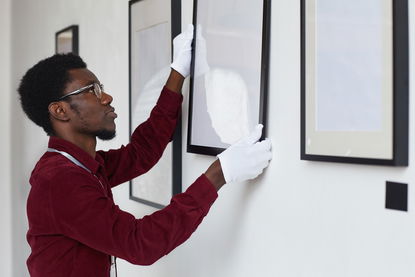
Art is another way to put color inside your home, but you must be careful in choosing what to hang on your walls.
Julia Hammond of Axpublisher says, “The best way to decide where and how to hang your artworks is to lay a bagua map of your home and find out which direction each room falls under. However, there are some main rooms in your home for which a particular element or feature will be most beneficial.”
“Your home office space should focus on bringing powerful chi to your career. To achieve this, decorate with water elements such as mirrors and water-themed wall art.”
“The living room is typically considered a family space. Therefore it’s best served by decor that calls upon the family-oriented wood element. Rectangular shapes and the colors green or brown are good choices. More literally, any art involving forestry and landscapes is going to help boost the wood element here.” she added.
- Use Color
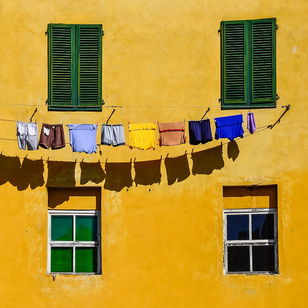
Color is associated with pretty much everything in our lives. In Feng Shui, color is primarily used to represent and balance the Five Elements.
Kathryn Weber of redlotusletter.com says, “Feng shui provides several starting points for color selection because each color has a different meaning and direction associated with it.
However, if you can paint your house a color that is harmonious with the direction it faces, you will help create a beneficial environment in the home, and help harmonize it with the environment, thereby making life go smoother and easier.”
She published, A Feng Shui Guide to Choosing House Color
Use feng shui to harmonize house color with the direction that it faces.
White (creativity/children): Good for west, northwest, and north-facing houses as it reflects light well and stimulates these directions.
Green/Purple (growth/good health/wealth): Good for east and south-facing houses.
Blue/Purple (career/wealth/opportunities): Good for north, East, and southeast facing houses.
Yellow/Beiges/Gold (ochre) (relationships/stability): Good for northeast, west, southwest, and northwest facing house. Yellow is a color of wisdom and study.
Reds/Pinks (social status, recognition, relationships): South, southwest, and NE facing houses benefit from these colors.
Browns (health, happy family relationships): Good for growth and longevity and excellent for east-facing houses and good for the south (fire) direction.
Taupe (relationships, stability, grounding): This color is excellent for the northeast and southwest because these are “earth” directions and taupes are earthy or stone-type colors. It also helps stabilize relationships and promote family harmony – particularly for the woman of the household.”
- STOVE
Stove plays a vital part when it comes to Feng Shui application at home. It represents the fire element. Besides keeping your stove clean, you should never let the stove and the sink face each other as it marks a clash between fire (stove) and water(sink) elements.
YourChineseAstrology says, “The stove should not face the kitchen door; otherwise, the family is prone to bad luck, unstable emotion and frequent quarrel.” They also added, “The stove should not face the sink directly, or the fire and water restriction may lead to career setbacks and marital conflicts. Also, the stove should not face the refrigerator, a place of storage and wealth accumulation which belongs to water and should avoid the fire attack; otherwise, the family will suffer from health problems”
Wayfengshui published, “Some houses have a water drainage hole right beneath their stove to facilitate cleaning. However, a drainage hole under the stove may cause the female homeowner to suffer from gastrointestinal problems.
To eliminate the negative effects, use a brick to cover the hole on an auspicious date. However, this should ideally be done with the help of a fengshui master as they can help pick the optimal setup, tailored to suit your various needs.”
- Good Lighting
Lighting is a simple way to bring more positive energy into your home. You can use light bulbs that imitate natural light.
Sally Painter, a Feng Shui Practitioner, on her article “Important Lighting Tips in Feng Shui” suggested, “Add Lamps for More Light, Add floor lamps and table lamps to introduce more yang energy. Floor lamps, especially torchiere lamps, brighten dark corners. A torchiere floor lamp is an excellent choice since the light shines up to the ceiling and is reflected back into the room. The upward lighting can serve as a cure for overhead beams by negating the inauspicious energy associated with beams.
She advised avoiding low-suspended light. “Feng shui principles dictate that symbolism can be powerful. This holds true for lighting fixtures. For example, you should avoid a low-suspended light fixture that hangs from the ceiling. In feng shui, this symbol is one of hanging and considered very inauspicious for those who dwell in the home,’ she added.
- Mirror
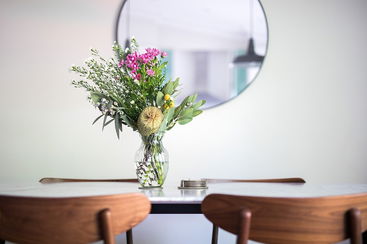
Feng shui experts suggest hanging mirrors in the dining room, especially near the dining table. The dining table represents the house’s vault of wealth, and having a mirror reflect it doubles the ability to hold wealth.
Also, it is advised that the mirror do not face the main gate or the bedroom door because it may reflect the good fortune away and bring bad luck with your career.
Victor Cheung of Fengshuinexus suggested, “In terms of Feng Shui, mirrors are great for the dining room and good for narrow stairways and hallways. However, where to place them is critical. For example, mirrors in the dining room shouldn’t face the kitchen stove or the window, and mirror should not face each other in long hallways.
As for other places, it is best not to place mirrors unless advised by your trusted Feng Shui consultant. This is especially true for Bagua mirrors, where it is essential that you get professional advise instead of doing it yourself.”
- Put plants
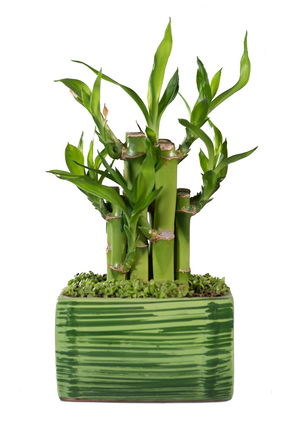
Karen FrazierFeng Shui Teacher and Energy Healer, suggested 7 AuspiciousFengshui Plants. The Lucky Bamboo, Jade plant, Money Tree, Orchids, Philodendron, Peace Lily and Citrus Trees.
She said, “Lucky Bamboo Is a Top Feng Shui Plant. Lucky bamboo is considered one of the most fortuitous plants for bringing positive feng shui energies into your home or workspace. A symbol of good fortune, lucky bamboo balances all five elements. It is best when placed in the wealth corner of your home or workspace. The number of stalks the plant has will determine which aspects it brings the most luck to.”
Zoë Sessums of Architecturaldigest says, “Placing a plant within three feet of your computer to filter electromagnetic energy is a terrific way to start with combatting negative energy. Plants radiate harmonious energy simply by being living things. If you’ve ever wondered why plant-filled spaces bring you joy, this might have something to do with it.” He added,