
The canyon itself can impact the climate
The Grand Canyon has a rise crossing from around 2,000 feet to the north of 8,000 feet, permitting it to encounter an assortment of weather patterns. Therefore, the temperature by and large increments by 5.5 degrees with each 1,000-feet less from the ground.
Hidden Caves!
There are approximately 1,000 caverns or caves in the Grand Canyon and 335 of those have been recorded. Much less have been planned or stocked. Today, just one cavern is available to people in general – – the Cave of the Domes on Horseshoe Mesa.
It is bigger than Rhode Island
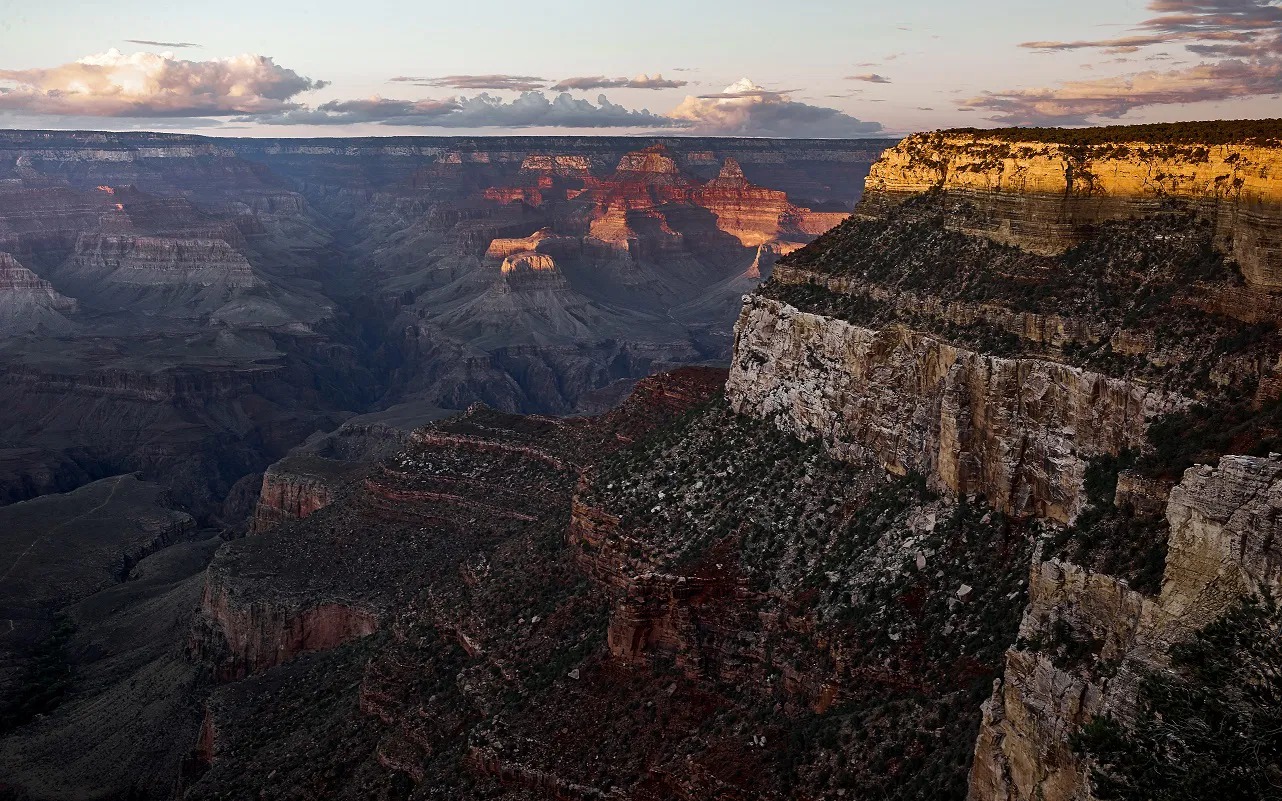
The Grand Canyon is 277 miles in length and 18 miles wide. While the recreation area does exclude the whole gulch, it measures in at an incredible 1,904 square miles altogether. In an examination, Rhode Island is around 1,212 square miles.
You can have the Grand Canyon to Yourself
Go to Tuweep, it offers an opportunity for an uncrowded, provincial, and private involvement with the Grand Canyon. Here a 3,000-foot sheer drop gives dazzling perspectives on the North Rim of the gully and the Colorado River. In any case, be cautioned – – the region must be reached by arranging troublesome streets with a high-leeway vehicle.
There are lots of fossils but no dinosaur bones!
The Grand Canyon could resemble the ideal spot to go searching for dinosaur bones, however, none have at any point been tracked down there, and understandably. The stone that makes up the gulch dividers is incomprehensibly more antiquated than the dinosaurs – around a billion years elder, at times – however, the actual ravine most likely didn’t frame until after the dinosaurs were a distant memory.
While the dinosaurs could have passed up seeing the Grand Canyon, heaps of different fossils have been observed that propose different animals regularly visited the area. They range from antiquated marine fossils going back 1.2 billion years to genuinely late land vertebrates that left their remaining parts in gulch caves around 10,000 years prior.
A town exists in Grand Canyon
Data about Grand Canyon don’t regularly incorporate data about its human populace, however shockingly, it has one. Supai Village is situated at the foundation of the Grand Canyon inside the Havasupai Indian Reservation. Difficult to reach by street and with a populace of only 208, it is the most distant local area in the lower 48 states and is the main spot where mail is as yet conveyed by pack donkey.
No one knows how old it is
It has for quite some time been accepted that the Colorado River started cutting the Grand Canyon around 6 million years prior, however, a recent report recommends that the cycle might have started as far back as 70 million years. Probably, the Grand Canyon as far as we might be concerned today began as a progression of small canyons 70 million years prior, however, most of the gorge didn’t start to come to fruition until significantly more as of late.